Blue Drop Down Menu :-

Drop Down MenusCSS Drop Down MenuPure CSS Dropdown Menu

Monday, 1 February 2016

carrl

Quick Facts
ALSO LISTED IN
ALSO KNOWN AS
Carl von Linné, Carl Nilsson Linnæus, Carolus Linnaeus, Carolus a Linné, Charles Linné
FAMOUS AS
Botanist
NATIONALITY
RELIGION
Church of Sweden, Lutheranism
BORN ON
23 May 1707 AD
BIRTHDAY
DIED AT AGE
71
SUN SIGN
Gemini    Gemini Men
BORN IN
Råshult
DIED ON
10 January 1778 AD
PLACE OF DEATH
Linnaeus' Hammarby
FATHER
Nils Ingemarsson Linnaeus
MOTHER
Christina Brodersonia
SIBLINGS
Samuel Linnaeus
SPOUSE:
Sara Elisabeth Moræa
CHILDREN
Carl Linnaeus the Younger, Elisabeth Christina von Linné, Sara Magdalena von Linné, Johannes von Linné, Lovisa von Linné, Sara Cristina von Linné, Sophia von Linné
EDUCATION
Uppsala University
Lund University
1735 - University of Harderwijk
FOUNDER/CO-FOUNDER
Royal Swedish Academy of Sciences

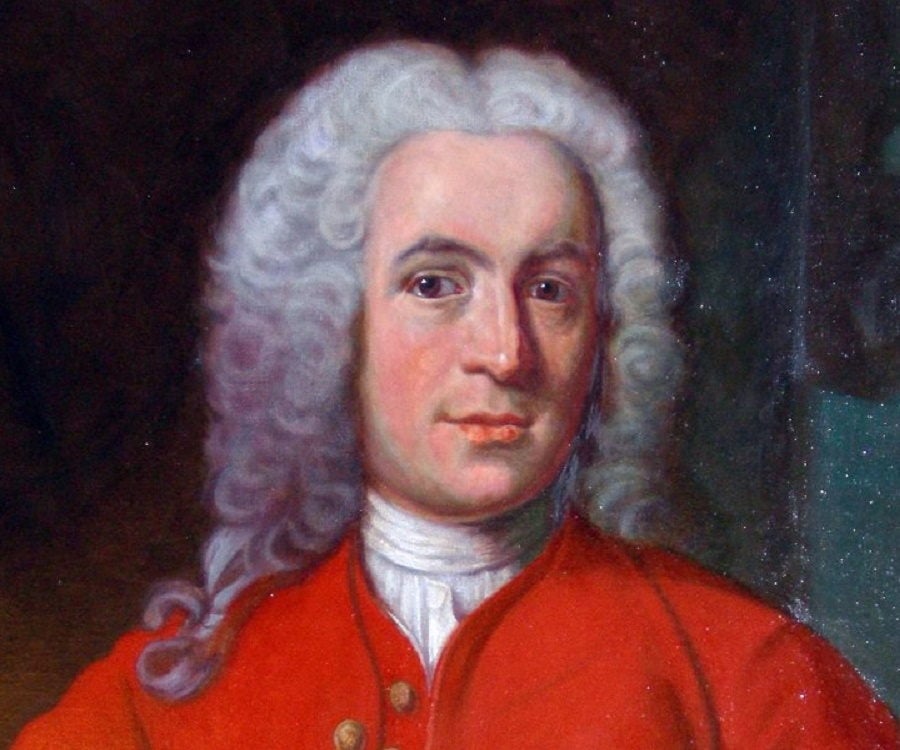
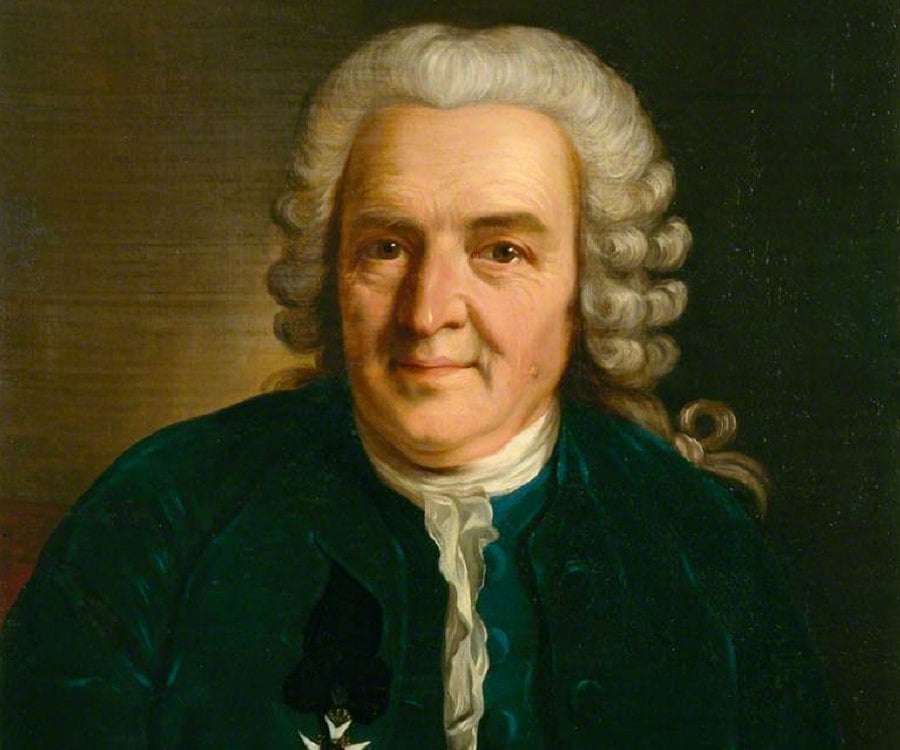
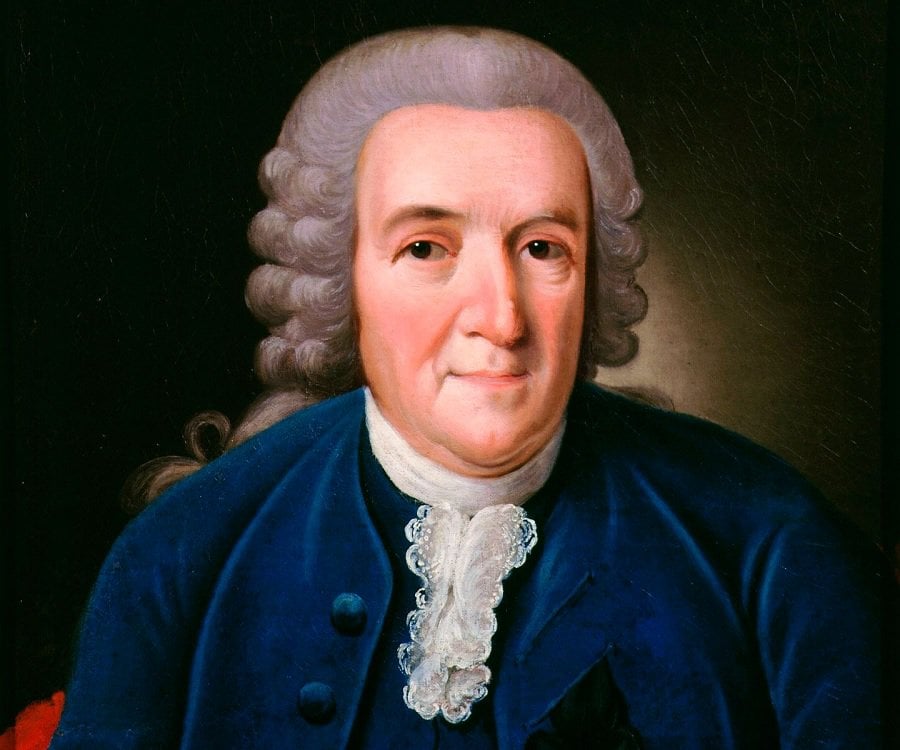
Carl Linnaeus, often known by the Latin form of his name as Carolus Linnaeus, is the father of modern biological classification systems. Born into a small parsonage in the southern tip of his country at the dawn of the Renaissance, Carl was given a thorough home school education by his father. Later, Carl would have his curiosity about the natural world piqued during lengthy childhood trips and explorations. Parleying his intellectual curiosity into formal studies, Linnaeus enrolled in a number of universities to study under masters in the field. By the time he graduated, Linnaeus had become an expert biologist, and was asked to give lectures on the subject. Linnaeus then received sponsorship to conduct numerous field studies where hundreds, if not thousands, of species of flora and fauna were identified, labeled and catalogued. The eminent biologist continued his work until he finally published a series of scientific masterpieces, outlaying his system for dividing both the animal and plant kingdoms into a nested series of categories and sub-categories. Although it has been modified since its first iteration, the classification system invented by Linnaeus still forms the backbone of all modern biological sciences today. Linnaeus continued a long and distinguished career as a researcher, academic and professor until his death at an advanced age from natural causes
Childhood & Early Life
  • Carl Linnaeus was born on May 23, 1707 in Rashult, part of the Stenbrohuit Parish in Sweden. His father was Nils Ingermarsson Linnaeus and his mother was Christina Brodersonia.
  • Nils was an amateur botanist when not fulfilling his duties as a Lutheran minister and curate in southern Sweden. Carl eventually had three younger sisters and a brother. He learned a variety of advanced subjects from home school courses administered by his father and some hired tutors.
PUBLISH
Career
  • By age 17, Linnaeus had become well-versed in all of the existing botanical literature. That same year, he entered the ‘Vaxjo Katedralskola’ (Cathedral School) where he studied advanced topics such as mathematics, theology, Greek and Hebrew, a series of courses used for boys interested in joining the priesthood.
  • In 1721, he enrolled in the ‘University of Lund’ to study botany full-time. Following his mentor Johan Rothman's guidance, Linnaeus began to learn to classify plants.
  • In 1728, he transferred to ‘Uppsala University’ to continue to study both medicine and botany. While there, he made a strong connection with Olof Celsius, who would later invent the popular temperature scale used around the world today.
  • Linnaeus wrote his first master thesis on plant sexual reproduction in 1728. A year later, he was invited to give lectures on the paper to hundreds of people.
  • In 1732, he was awarded a large grant from the ‘Royal Swedish Society of Sciences’ to pay for an extensive journey through northern Sweden in search of new plants, animals and mineral deposits. During the expedition, he discovered a small flower, ‘Linnaea borealis’, which would later be named in his honor.
  • In 1734, he led an expedition of students to Dalarna, to catalog and possibly discover new mineral deposits.
  • In 1735, Linnaeus traveled to the Netherlands where he was awarded a doctoral degree in medicine from the University of Harderwijk. Later in the same year, this renowned scientist published his masterpiece 'Systema Naturaea', a detailed new system for classifying plants.
  • In 1737, he published the results of his long journey through the Scandinavian tundra in a book entitled 'Flora Lapponica', which classified over 534 different species of flora in the region. The same year, Carolus published 'Genera Plantarum', in which he described over 935 different genera of plants.
  • Also in 1737, he published 'Hortus Cliffortianus', an extensive catalog of the plants in the herbarium and botanical garden in the city of Hartekampf. The following year, he returned to Sweden and became a physician.
  • In 1741, he was appointed to become a professor of Medicine at ‘Uppsala University’. Ten days after receiving the new job, he led a team of university students on an expedition to discover medicinal plants. Over 100 previously undiscovered plants were catalogued.
  • In 1745, Linnaeus published two books: 'Floria Suecica' and 'Fauna Suecica' about the totality of natural life in Sweden.
  • In 1750, he became the rector of ‘Uppsala University’. He would hold the position for the next 22 years.
PUBLISH
Major Works
  • First printed in 1735, the book 'Systema Naturae' was the complete description of how Linnaeus had classified more than 7,000 species of plants and 4,000 species of animals. The classification system for plants and animals devised by Linnaeus forms the backbone of all modern biological sciences.
PUBLISH
Personal Life & Legacy
  • Carl Linnaeus married Sara Elisabeth Moraea on June 26, 1739. Together, they had seven children, six of which survived infancy.
  • Linnaeus passed away on January 10, 1778 after a series of paralyzing strokes. He was interred at the Uppsala Cathedral.
PUBLISH
Trivia
  • When Carl's father Nils was accepted to the University of Lund, the school required him to choose a family name. He picked Linnaeus, the Latin name of the linden/lime tree that also grows in Sweden.
  • As a child, Carl would often get upset. His parents and friends knew that if they gave Carl a flower, he would soon calm down.
PUBLISH
See the events in life of Carl Linnaeus in Chronological Order
Would You Like To Discuss Or Comment On Carl Linnaeus?

Read more at http://www.thefamouspeople.com/profiles/carl-linnaeus-6278.php#1hyUbhHfCdW0TXKH.99

mendal

Quick Facts
ALSO LISTED IN
ALSO KNOWN AS
father of modern genetics
NATIONALITY
BORN ON
22 July 1822 AD
BIRTHDAY
DIED AT AGE
62
SUN SIGN
Cancer    Cancer Men
BORN IN
Heinzendorf bei Odrau, Austrian Empire
DIED ON
06 January 1884 AD
PLACE OF DEATH
Brno (Brünn), Austria-Hungary
FATHER
Anton Mendel
MOTHER
Rosine (Schwirtlich) Mendel
SIBLINGS
Veronica Mendel, Theresia Mendel
EDUCATION
Palacký University Olomouc University of Vienna

Gregor Mendel, born as Johann Mendel, was an Austrian scientist and monk hailed as the “Father of modern genetics” for his pioneering research in the field of heredity. He was a monk in Augustinian Abbey of St Thomas in Brno where he worked as a teacher. He had a deep interest in botany which led him to conduct experiments on pea plants. Inspired by the work of a biologist named Franz Unger, he began his experiments in the monastery’s sprawling gardens. Over the course of his study he observed that there were seven characteristics in the pea plants, and two forms of each characteristic. These characteristics included seed shape and pod shape in addition to plant height and seed colour. Mendel observed that the seven characteristics he had recognized remained consistent over generations in purebred plants. For eight years, he carefully crossbred and grew thousands of pea plants, and patiently analyzed and compared the plants and seeds for difference in colour and size of the seeds, and variations in length of the plants. He took various precautions to prevent the accidental pollination of the flowers which could have altered the results of the experiments. His meticulous study and the resultant observations led to what is today known as Mendel’s Laws of Inheritance.
Childhood & Early Life
  • Gregor Mendel was born as the middle child and only son of Anton and Rosine Mendel. He had two sisters and the family lived and worked on the farm they had owned for generations.
  • As a child he worked in the garden and studied beekeeping which cultivated in him a deep love for biological sciences.
  • He received his early schooling in his own small village but had to be sent to a nearby town for his secondary education. The decision to send away their only son was not an easy one for his parents, but they did it for sake of his future.
  • Later on he went to the University of Olomouc where he studied philosophy and physics from 1840 to 1843.

PUBLISH
Career & Works
  • In 1843, he began his training as a priest and joined the Augustinian Abbey of St Thomas in Brno as a monk. He took the name ‘Gregor’ on entering the religious field.
  • The monastery sent him to the University of Vienna to study under Abbot C.F.Napp. There he studied physics and mathematics under Christian Doppler and botany from Franz Unger.
  • He rejoined the monastery as a teacher in 1853 where he was motivated by his colleagues to conduct a study on plants.
  • He began to conduct his practical study on plants in 1856.He studied edible pea plants and recognized seven distinct characteristics that remained consistent over generations in purebred varieties. These characteristics included: height of the plant, shape of the pod, shape of the seed, size and colour of the seeds, etc.
  • He cross-pollinated the plants with contrasting characteristics in order to study the effects on the offspring. He also took due precaution to prevent accidental pollination by insects. He cultivated thousands of pea plants over the course of his experiments.
  • He collected the seeds of the offspring and analyzed them for variations in colour, shape, and size. He also compared the plants for differences in height.
  • Over a period of eight years he painstakingly examined the plants, pods and seeds and made observations that would form the basis for a deeper study of genetics.
  • He presented the results of his experiments at the Natural History Society of Brno in 1865. His findings were published in a paper ‘Experiments on Plant Hybridization’ in 1866. But his research failed to create an impact at that time.
  • In 1868, he was made abbot of the monastery where he had been teaching for the past many years. The increased responsibilities prevented him from conducting any further scientific experiments.
  • Gregor Mendel’s works failed to gain much importance during his lifetime, but formed the foundation for what is today known as Mendel’s Laws of Inheritance.
PUBLISH
Major Works
  • Mendel through his extensive experimentation and analysis founded the three laws or principles of inheritance: The law of segregation, the law of dominance, and the law of independent assortment.
  • He developed the concepts of dominant and recessive genes that explain how genetic traits are passed along from generation to generation.
  • His 1865 paper ‘Experiments on Plant Hybridization’ which was largely ignored during his lifetime is today regarded as the base of genetic experimentation.
PUBLISH
Personal Life & Legacy
  • As a young man he had very close and loving relations with his parents. Being a monk, he never married and led a life of celibacy.
  • He died at the age of 61 after suffering from kidney problems.
  • His work on heredity which did not find much acceptance during his lifetime took on much greater significance after his death and he was posthumously hailed as the father of modern genetics.
PUBLISH
Trivia
  • He founded the 'Austrian Meteorological Society' in 1865.
  • He had also tried conducting experiments on honeybees but was not much successful.
  • All the papers in his possession were burned after his death.

Read more at http://www.thefamouspeople.com/profiles/gregor-mendel-3786.php#IOH9OZ1q676r6ecx.99

syllabus

COURSE CODE: FCPBS PEDAGOGY OF BIOLOGICAL SCIENCE - PART I
OBJECTIVES:
At the end of the course the student-teachers will be able to
>       acquire the knowledge about the school content in Biological Science;
>       understand the aims and objectives of teaching Biological Science;
>       acquire various teaching skills and develop competence in structuring lesson plans;
>       understand the integration and organisation of Biological Science curriculum;
>       identify the various learning resources;
>       explore the methods of teaching Biological Science;
>       understand the issues in teaching and learning Biological Science;
>       understand the diversified needs of the students;
>       develop skill on classroom management; and
>       construct appropriate assessment tools for evaluation.

UNIT- I: SENSITISING THE SCHOOL CURRICULUM
Analysis of the Content course of Standard VI to VIII (Tamil, English, Mathematics, Science and Social science) Text Books prescribed by Government of Tamil Nadu and content course of standard IX - X ( for UG), XI - XII (for PG) Biology Text Books Prescribed by Government of Tamil Nadu.

UNIT - II: AIMS AND OBJECTIVES OF TEACHING BIOLOGICAL SCIENCE
Need and significance of teaching Biological Science -Aims: Practical, Social, Disciplinary and Cultural- Aims: General Instructional Objectives and Specific Instructional Objectives relating to the Cognitive, Affective and Psychomotor Domain based on Bloom's Taxonomy- Revised Bloom's Taxonomy.


UNIT-III: TEACHING SKILLS AND ORGANIZATION OF PRACTICE -TEACHING PROGRAMME
Micro teaching: Origin, Need, Phases, Definition, Characteristics, Process, Cycle, A Plan of action, Advantage of Micro teaching and its Uses-Skills : Explaining, Questioning , Blackboard usage, Reinforcement, Stimulus variation, Introduction - Unit Plan - Year Plan - Lesson Plan: Need and importance ,Characteristics of good Lesson Plan, Herbartian steps, Format of a typical Lesson plan - Motivation, Presentation, Application, Recapitulation and Assignment -Uses of Lesson plan - Organisation of Practice -Teaching Programme for B.Ed., Student-teachers. Role of the Supervisor; Role of the Principal and the Academic Staff in the Conduct of Practice-teaching Programme. General Teaching Competence Scale, Self-Appraisal Scale, Guidelines for Peer Observation and Framework of Evaluation

UNIT - IV:  INTEGRATION AND  ORGANIZATION  OF BIOLOGICAL
SCIENCECURRICULUM
Meaning of Curriculum, components of curriculum - Principles of curriculum construction -Organisation of curriculum - Process of curriculum organisation: Analysis of needs, Objectives, formulation of objectives, selection of content, selection of learning experience, organisation and integration of content and learning experience and evaluation techniques.

UNIT V: DEVELOPMENT OF TEACHING LEARNING MATERIALS
Edgar dale's cone of experience - Classification of teaching aids - Projected aids: OHP, slides, LCD projector, Epidiascope and Slide Projector - Non Projected Aids: Charts, Flash Cards, Printed Materials, Bulletin Board, Magnetic Board and Flannel Board. Need and importance of Audio Visual aids - Types of Audio Visual Aids - Radio, Television, Computer and Activity aids. Mobile Laboratories and Improvised Apparatus -


Science club, Science lab, Library, field trip, Field work and Science Exhibition: Need and importance, Organization, activities and its advantages.

UNIT-VI: STRATEGIES OF TEACHING BIOLOGICAL SCIENCE
Methods of Teaching: Analytic, Synthetic, Inductive, Deductive, Heuristic, Problem solving, Project and Laboratory - Activity Based Learning (ABL) -Active Learning Method (ALM), Lecture Method, Demonstration Method, Scientific Method - Symposia - workshop - Brain storming- panel discussion - seminar- team teaching - Assignment and Discussion. Techniques of Teaching Biological Science: Individualized Instruction, Programmed Instruction, Computer Assisted Instruction.

UNIT -VII: ISSUES IN TEACHING AND LEARNING
Gender issues - Individual differences, Language problem in learning - Nature of subjects, Examination and grading system - Teaching and Learning styles - Classroom behaviour of Teacher and Learner - Interest and Attitude of students towards learning -Difficulties in Learning Biological Science - Slow learners and gifted learners in Biological Science - Remedial and Enrichment programmes.

UNIT VIII: DIVERSIFIED NEEDS OF STUDENTS
Need for Learner Centred Approach; Historical Perspective; Attributes of learner Centred Classroom; Application of Learner Centred Approach; Integration of Learner Centred Approach with the Main Stream Education System - Non - Cognitive Abilities: Meaning and Nature - Interest: Meaning, Classification and sources - Attitude: Meaning and Importance - Value: Meaning, Importance and Source of Values. Organisation and management of a variety of co-curricular activities.

UNIT IX: CLASSROOM MANAGEMENT
Concept of class Room Management - Class Room Organisation - Components of Class Room Management - Class Room Learning atmosphere - Positive Classroom climate -


Factor supporting an Effective Learning atmosphere - Advantages of Positive Learning climate - Creative Ideal classroom atmospheres - Technical teaching skills - Prevention and Control of Students - Classroom Activities - Classroom Records and Rules.

UNIT-X: EVALUATION OF TEACHING - LEARNING
Concept of Evaluation, Objective Based Evaluation, Continuous and Comprehensive Evaluation (CCE): Summative and Formative Evaluations. Different types of tests: Standardised and Teacher made test - Achievement, Diagnostic, Prognostic- Criterion and Norm referenced evaluation - Construction of Achievement Test - Statistical Measures: Mean, Median, Mode, Range, Mean Deviation, Quartile deviation, Standard Deviation, Rank Order Correlation Coefficient Method and Karl Pearson's product moment method - Graphical representation of data: Bar diagram, Histogram, Pie Chart, Frequency Polygon, Frequency curve and Ogive curve.

SUGGESTED ACTIVITIES
1.      Visit to Zoological Park / Botanical garden/ Food industry/ Agro based industry.
2.      Write the life history and contributions of Carl Linnaeus/ Gregor John Mendel/ Louis Pasteur/ Ian Wilmut.
3.      Preparation of improvised Biological Science kit.
4.      Conducting and Organising Biological Science Quiz /Biological Science Club / Science fair.
5.      Organise an event on Earth day/ Environment day/ Water day/ World health day.
6.      Collection, preservation and display of museum specimen.
7.      Preparation of Herbarium ( 5 Families).

8.      Maintenance of aquarium, terrarium, vivarium, use of incubator and so on.